Nicotine Pouches & Harm Reduction: A B2B Perspective
Nicotine pouches — the tobacco-free, smoke-free pouch placed between the lip and gum — have moved from niche to mainstream fast. In the US, past-year use rose from 3.4% in 2023 to 5.9% in 2024. For European distributors and private-label buyers, that trajectory signals a category worth a serious look. Yet the product is still widely confused with cigarettes or vaping. The science is clearer than the marketing noise.
Where pouches sit on the relative-harm scale
Public-health research ranks nicotine products not by "good vs bad" but by toxicant exposure. The pathway matters: combustion creates the most harm, heated aerosol less, and oral delivery with no combustion the least.
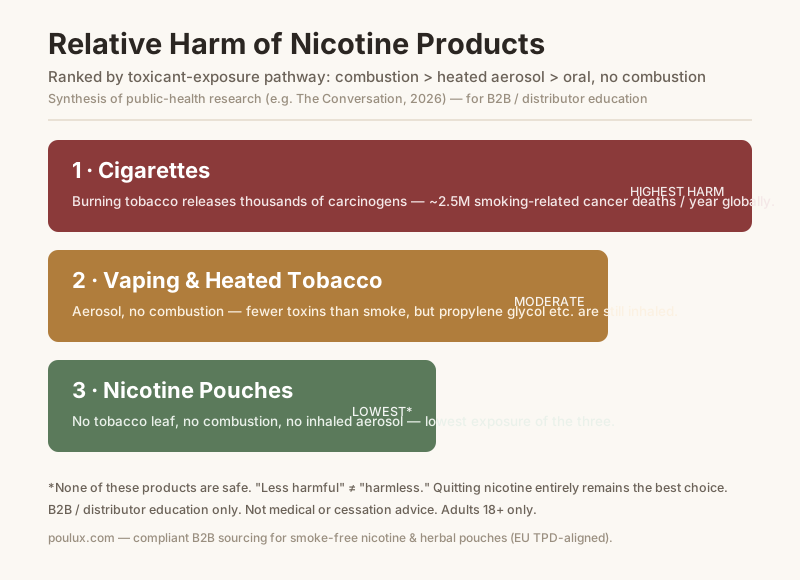
- Cigarettes — burning tobacco releases thousands of carcinogens; linked to ~2.5M smoking-related cancer deaths globally each year. Highest harm.
- Vaping & heated tobacco — aerosol, no combustion, fewer toxins than smoke, but propylene glycol and other compounds are still inhaled. Moderate.
- Nicotine pouches — no tobacco leaf, no combustion, no inhaled aerosol; mucosal absorption gives the lowest toxicant exposure of the three. Lowest of the three — but not "safe".
The chart below places the three side by side on relative harm (synthesis of public-health research, e.g. The Conversation, 2026 — for category education, not medical advice).
What this means for B2B buyers
The honest framing is "less harmful, not harmless." Any nicotine product carries addiction risk, and the best outcome for users is still to quit. But for adult smokers who will not immediately quit, switching away from combustible tobacco is where the exposure reduction sits.
For a distributor, that translates into a defensible category story: pouches are a credible next step in the smoke-free shift — provided the supply chain is compliant, documented, and age-gated.
What a 2024 systematic review adds
A 2024 systematic review (Hartmann-Boyce & Travis, Nicotine & Tobacco Research) pooled the available studies and sharpened two points B2B buyers should hold onto. First, pouches contained fewer harmful chemicals, at lower levels, than both cigarettes and smokeless tobacco (snus) — consistent with the ladder above, though product-to-product variation is real and some flavourings associate with higher toxicant levels. Second, the "tobacco-free" label is a trap: pouches contain nicotine, yet the wording leads some consumers to assume they do not. That makes clear nicotine-content declaration and addiction warnings a compliance must, not a nice-to-have.
The same review flagged the demand-side risk: in the US, 35–42% of youth were aware of pouches and 9–21% of non-users said they were open to trying. For EU distributors the lesson is operational, not moral — strict age verification at every sale point is what keeps an adult category from becoming a regulatory liability. We cover the label and flavour specifics in a companion piece: Nicotine Pouch Labels & Flavours: the B2B compliance view.
The compliance baseline you should demand
- EU TPD-aligned notification (EU Common Entry Gate) before market placement.
- Per-batch emissions testing, full ingredient list with nicotine-content tolerance, and child-resistant packaging.
- Age verification at every downstream sale point — non-negotiable.
- Documented COA / MSDS per SKU; no unverifiable "safer" health claims to end consumers.
Talking to your market
Lead with category education, not with health promises. The distributors and retailers who win this category are the ones who can explain the relative-harm ladder to their own buyers — and who can show the paperwork that proves their supply is above board.
PouLux builds TPD-aware documentation into every nicotine-pouch quote. Request the compliance pack.
Related guides
EU TPD Compliance for Nicotine Pouches in 2026
What TPD actually requires for nicotine pouches, and how to stay on the right side of it.
Nicotine Pouch Labelling Requirements in the EU
The exact label elements you need so your cans clear customs and shelves.
Are Nicotine Pouches Legal in the EU? A Country-by-Country View
The honest answer: it depends on the country. Here is the framework for checking.
Want this as a wholesale quote?
Tell us your market and volume — reply within 24h.